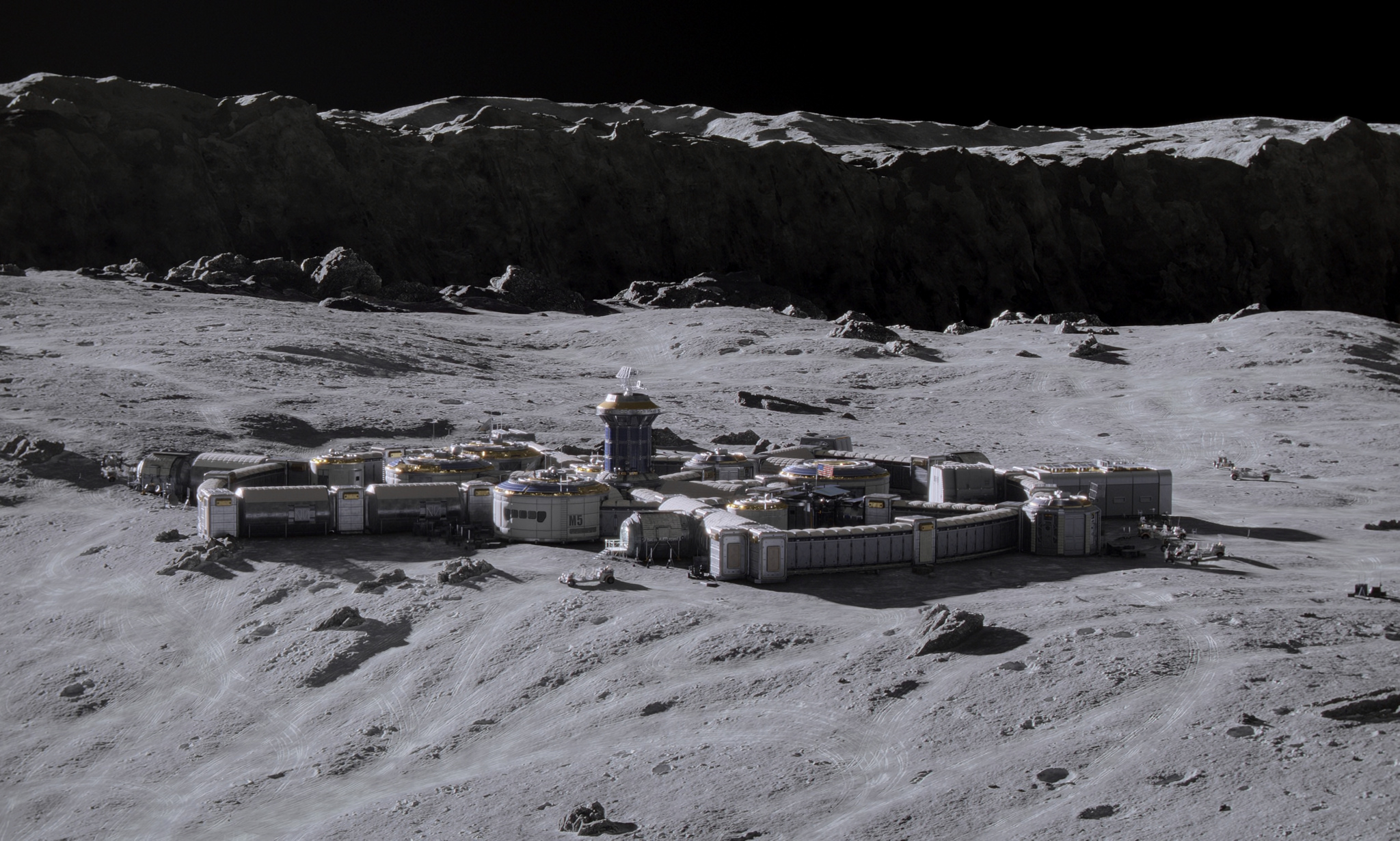
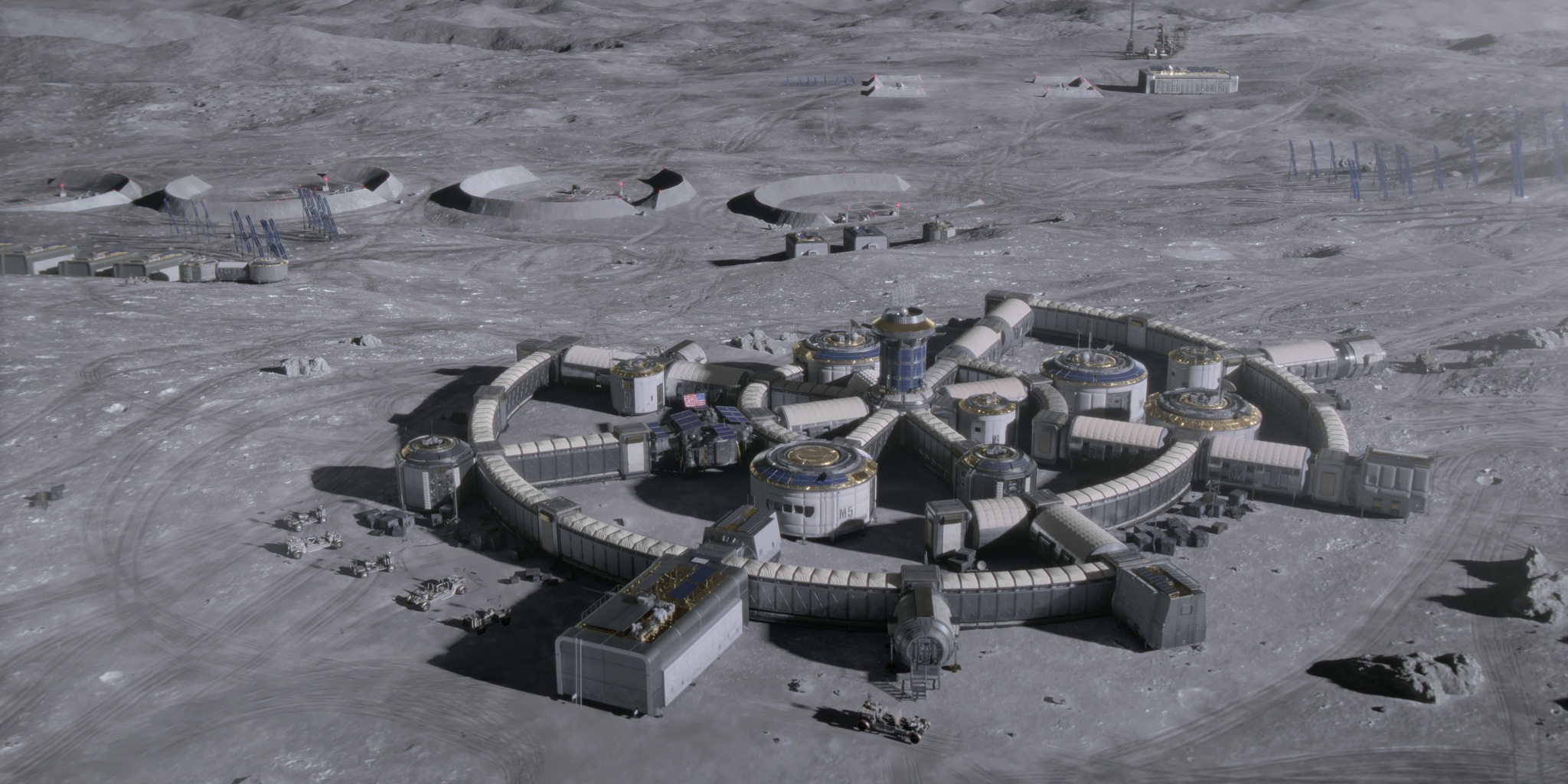
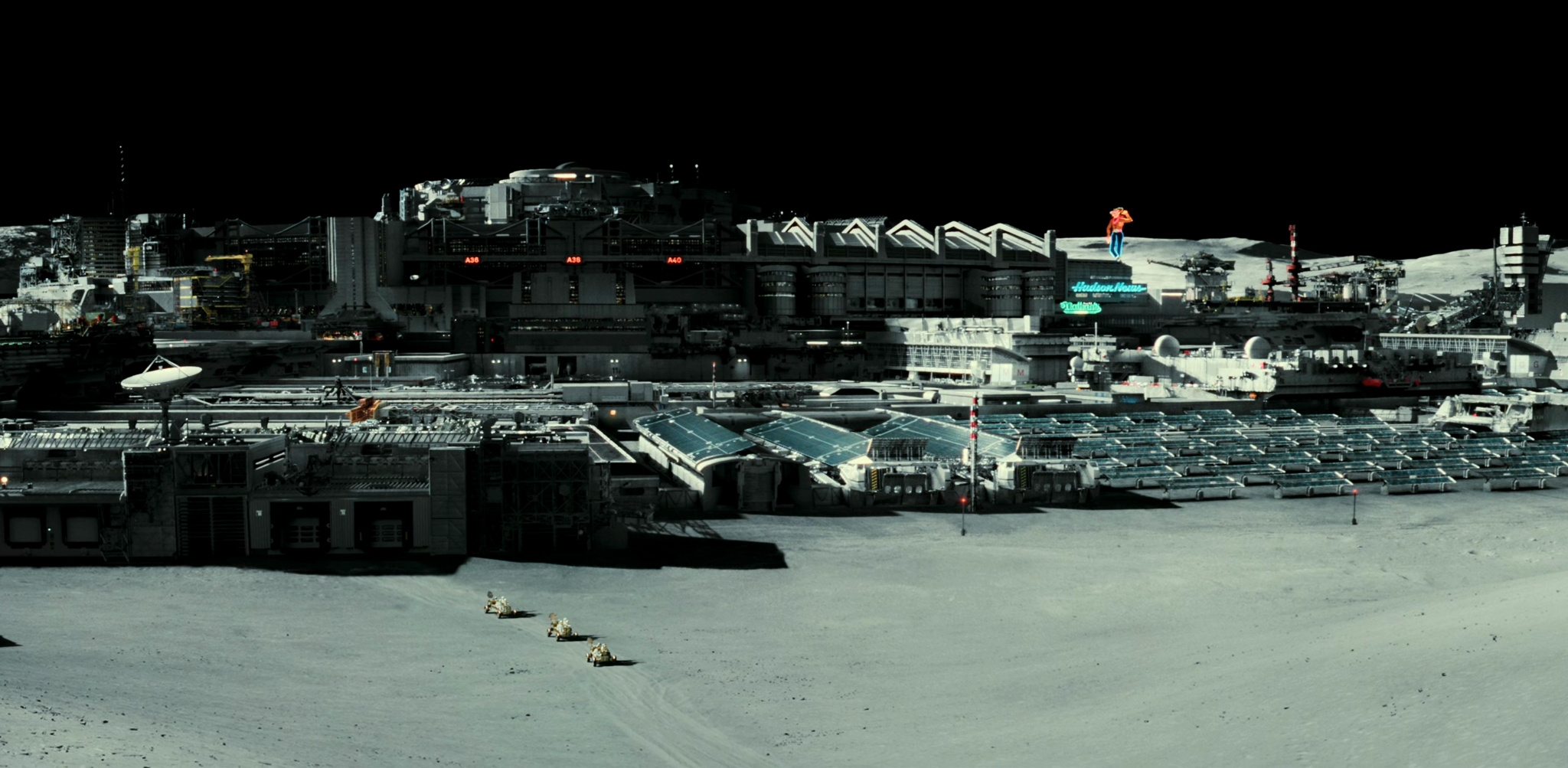
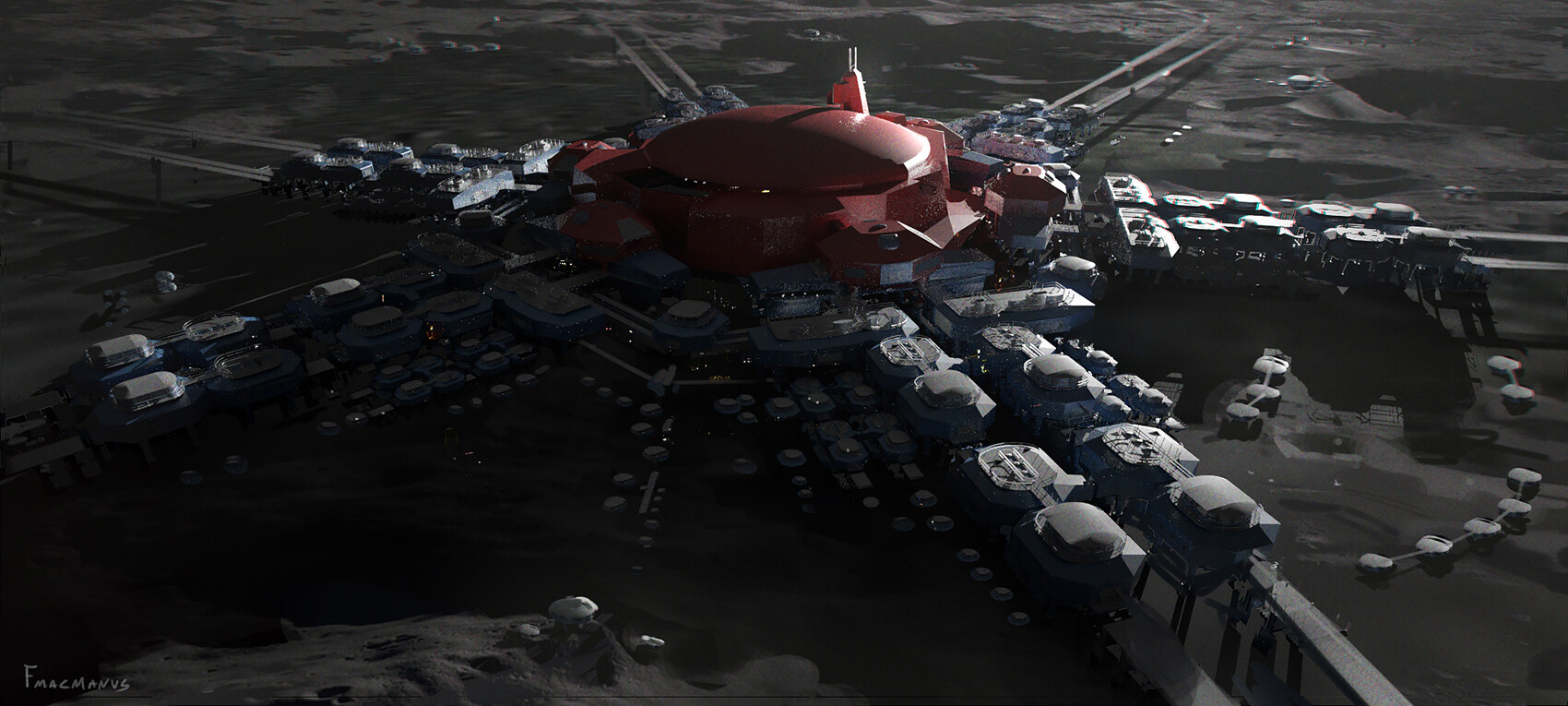
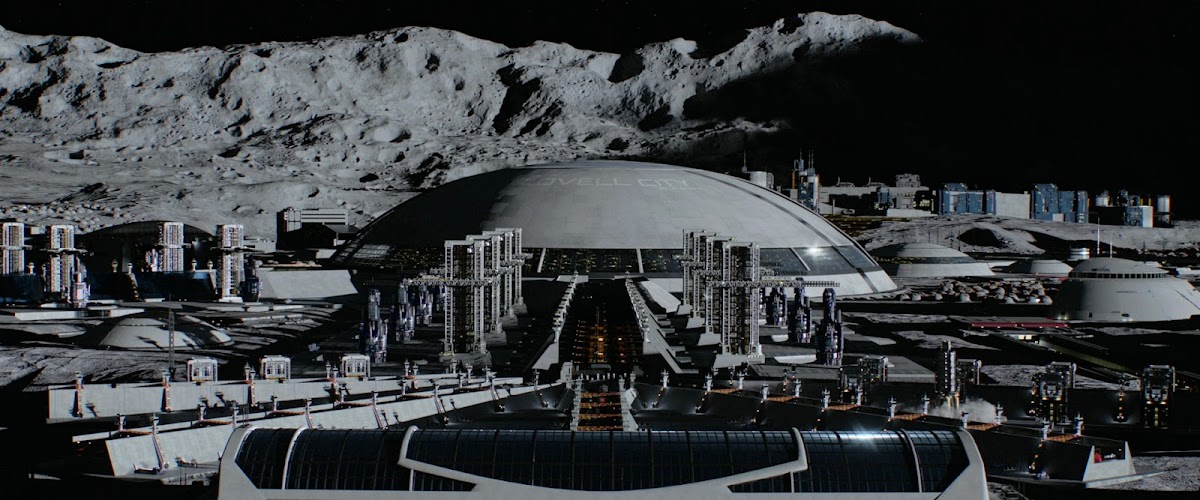
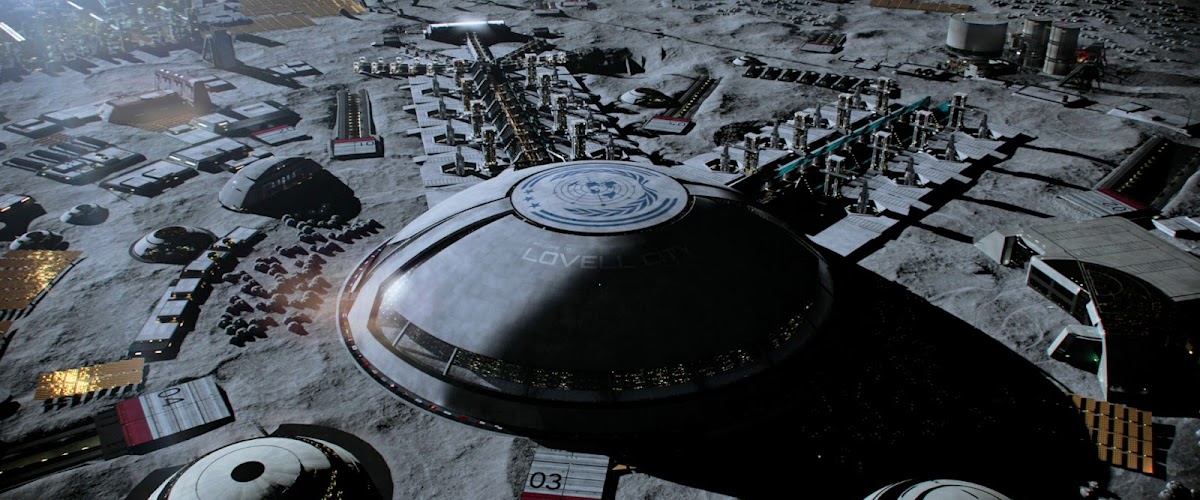
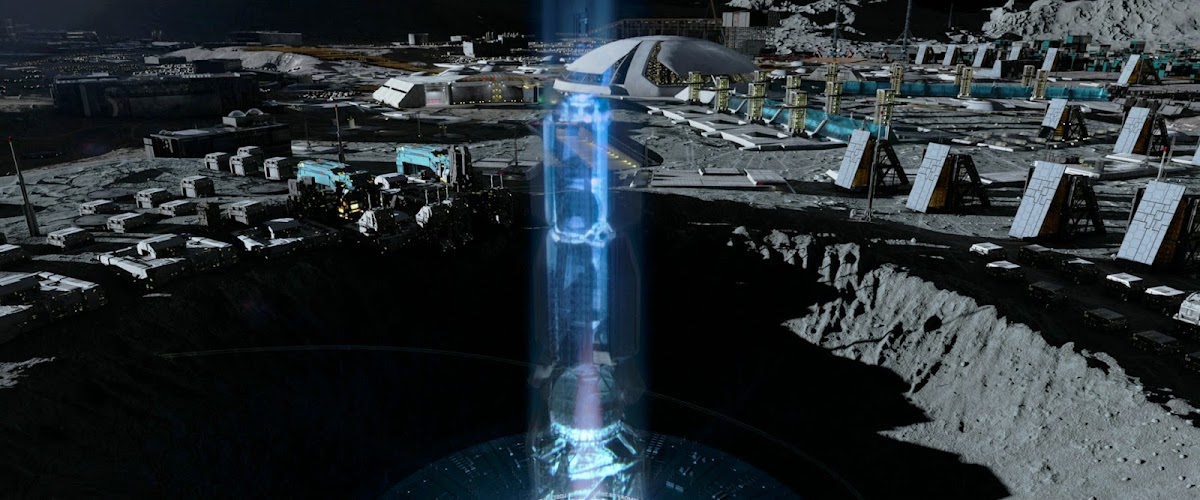
The Wandering Earth II is a 2023 Chinese movie set in the mid-21st century as humanity races to save Earth from the Sun’s impending expansion into a red giant. The film chronicles the global effort to build thousands of massive planetary engines (and three more on the Moon) to propel the entire planet out of the Solar System - an audacious plan known as the Moving Mountain Project - while contending with the rival Digital Life Project that seeks to upload human consciousness into computers instead.
In the film, the Lunar bases for the three giant planetary engines built into Lunar crater rims are portrayed as sprawling, industrial megacomplexes carved into the Moon’s harsh terrain - towering gantries, clusters of spaceships on multiple launch pads, heavy lunar rovers kicking up plumes of regolith, and extensive networks of modular habitats, storage tanks, and processing plants illuminated by harsh artificial lights.
Here is a collection of Lunar scenery from the movie:
Showing posts with label Lunar base. Show all posts
Saturday, January 17, 2026
Wednesday, April 23, 2025
Can China beat the US in the 2nd Space race to the Moon?
The Moon, a celestial body last visited by humans during the Apollo 17 mission in 1972, is once again at the forefront of a new space race. Both the United States and China have outlined ambitious plans to return astronauts to the lunar surface and establish permanent bases, signaling a new era of lunar competition. In recent years China has shown rapid progress in robotic exploration of the Moon, including its far side, but can China actually surpass the US in returning humans to the Moon and establishing a continuous human presence there?
China's lunar ambitions are encapsulated in the Chinese Lunar Exploration Program, also known as the Chang'e program, named after the mythical moon goddess. This program has currently progressed through several phases, with the future phases focusing on manned missions and base construction:
China's Lunar Exploration Program: Plans and Timeline
China's lunar ambitions are encapsulated in the Chinese Lunar Exploration Program, also known as the Chang'e program, named after the mythical moon goddess. This program has currently progressed through several phases, with the future phases focusing on manned missions and base construction:
- Phase 1: Orbiting (2007-2010): Chang'e 1 and 2 successfully orbited the Moon, mapping its surface and testing technologies, laying the groundwork for subsequent missions.
- Phase 2: Robotic landing (2013-2019): Chang'e 3 (2013) and Chang'e 4 (2019) achieved soft landings, with Chang'e 4 notably landing on the far side of the Moon, a first in space exploration history.
- Phase 3: Sample return (2020-2024): Chang'e 5 (2020) and Chang'e 6 (2024) returned lunar samples, with Chang'e 6 being the first to collect from the far side, enhancing understanding of lunar composition.
- Phase 4: Robotic research station (2026-2028): The goal of Phase 4 is the development of an autonomous lunar research station near the Moon's south pole. Chang’e 7 (2026) will survey the south pole for water-ice and test in situ resource utilization (ISRU). Chang’e 8 (2028) will demonstrate advanced technologies including 3D-printed structures and ISRU methods critical for a future habitat.
- Phase 5: Manned landing (2029-2030): China's National Space Administration (CNSA) aims to land its first two-person crew on the lunar surface by 2030 (in some recent presentations even 2029), using a Lanyue lander and a Mengzhou re-entry capsule launched by heavy-lift Long March 10 rockets from Hainan’s Wenchang site. Large-scale tests of the lander and capsule systems are “on schedule,” though experts note China still trails NASA in overall crewed lunar infrastructure.
- Phase 6: International Lunar Research Station (ILRS) (2035): China aims to establish ILRS in the 2030s, initially as a robotic base, with plans to make it permanently habitable after 2035. The first phase of the lunar base is expected to be completed around 2035, with an extended model by 2050, located near the lunar south pole for access to water ice.
Saturday, January 25, 2025
Lovell city on the Moon in "The Expanse" TV series - concept art by Lee Fitzgerald
After the bombardment of Earth Lovell City on Luna (the Moon) became the de facto capital of United Nations, one of the three competing powers in universe of The Expanse TV series - a political sci-fi drama set a few centuries in the future where humans have colonized the entire Solar system. Luna functions as a way station between Earth and the rest of the Solar system, and its spaceport at Lovell City serves as a natural meeting place between residents of the inner planets and Belters. Due to its lower gravity, Luna is the only body in the inner system that Belters can easily visit. UN citizens living on Luna are generally wealthier than most of their counterparts on Earth.
Here is a collection of concept art for the Lovell city by Canadian designer Lee Fitzgerald:
Saturday, November 23, 2024
New design for SpaceX Lunar Starship
During the livestream of Starship Flight test 6 SpaceX presented a new design for the Lunar Starship (Human Landing System) which NASA has selected for the Artemis missions returning humans to the surface of the Moon. According to the current schedule SpaceX is tasked to get Artemis III crew on the surface of the Moon in the end of 2026; we estimate this mission will slip for about two years – to 2028 because developing a human-rated spacecraft is a lot harder task than building "just" a cargo rocket.
An upgraded Lunar Starship for later Artemis missions:
Saturday, August 17, 2024
Elevated train near a human colony on the Moon
Picture of the Day 17/08/2024 - Painting of an elevated train near a human colony on the Moon by French urban artist Colin Doublier.
Saturday, July 29, 2023
Jamestown US Moon base in "For All Mankind" season 3
Unlike the first two seasons, which focused on the Moon, season 3 of For All Mankind (an alternate history sci-fi TV series) focuses on Mars. But despite the Jamestown US Moon base being featured only briefly in the season, we can see it has been expanded significantly during the alternate history decade between season 2 (depicting 1983) and season 3 (depicting 1992 to 1995), completing the 1st ring of modules and adding a 2nd ring. So, in this alternate reality of the show development on the Moon has not been neglected because of the Mars mission.
NASA's Sojourner at Jamestown preparing for the mission to Mars:
Wednesday, December 7, 2022
Lunar colony in Ad Astra (2019) movie
Ad Astra is 2019 science fiction thriller set in mid-21st century when humanity has started to settle the inner Solar System. One of the most memorable parts of the movie is human colony on the Moon with space pirates :) chasing military rover convoy going to the spaceport on the far side of the Moon.
In the movie a son (Brad Pitt), serving in the military, is sent on a mission to uncover the truth about his famous father's (Tommy Lee Jones) long lost mission near Neptune which now threatens the survival of Earth. In his lonesome and dangerous mission he visits several places including a dynamic but wild human colony on the Moon and a desolate relay station on Mars. Here is a collection of HD images from the Lunar part of the movie:
Saturday, December 3, 2022
Lunar colony concept art for Ad Astra by Finnian MacManus
Concept art of the Lunar colony in Ad Astra (2019) movie (science fiction thriller set in mid-21st century when humanity has started to settle the inner Solar System) by film, game and TV concept artist, the founder and creative director of Terraform Studios, Finnian MacManus. More of his art here.
Friday, December 10, 2021
Lunar colony in season 5 of The Expanse
After the bombardment of Earth Lovell City on Luna (the Moon) became the de facto capital of United Nations, one of the three competing powers in universe of The Expanse TV series - a political sci-fi drama set a few centuries in the future where humans have colonized the entire Solar system. Luna functions as a way station between Earth and the rest of the Solar system, and its spaceport at Lovell City serves as a natural meeting place between residents of the inner planets and Belters. Due to its lower gravity, Luna is the only body in the inner system that Belters can easily visit. UN citizens living on Luna are generally wealthier than most of their counterparts on Earth.
As Mars was one of the major locations in season 4 of the show, Luna is in season 5, coming into spotlight after the bombardment of Earth. Here is a collection with HD images from the Lunar scenes in season 5 of The Expanse. There are a few more from the trailer of the season.
Avasarala looking at Lovell City:
Memorial at Lovell City:
Sunday, May 16, 2021
Lunar scenes in season 2 of "For All Mankind" alternate history TV series
Season 2 really kicked up the space race on Lunar surface in For All Mankind alternate history sci-fi TV series exploring the idea of never ending space race if Soviets would have beaten US in the race for the Moon. In season 1, depicting the events in alternate 1969 to 1974, both Soviets and US start building their separate bases at the rim of Shackleton Crater near the lunar South pole. In season 2, depicting the alternate 1983, both bases have been expanded and the superpowers compete for resources on the Lunar surface. The Cold War is very close to becoming a hot one.
The intention of the show is to jump about a decade further into the increasingly diverging reality of the show each season. The final scene of season 2 hints Mars will be the central stage in season 3. We are eagerly waiting to see how the authors of the show will have imagined humanity's journey to Mars in their alternate reality. The filming of season 3 has already started.
Jamestown US Moon base in 1983:
US mining site at Jamestown base:
Overview of the Jamestown base:
One of Jamestown's landing pads:
Monday, March 29, 2021
Jamestown US Moon base in season 1 of "For All Mankind" TV series
For All Mankind is alternate history sci-fi TV series depicting what could have happened if the space race had never ended after the Soviet Union succeeds in the first crewed Moon landing ahead of the United States in 1969. The authors of the show speculate such an event would force US to double down on space exploration altering the Apollo program from "flags and footprints" approach to a more ambitious one with extensive infrastructure buildup on the Moon (with hints of Mars exploration in later seasons of the show). Pouring money and resources into space exploration creates an atmosphere every space nerd would have wanted to continue after the enthusiastic 1960s.
Season 1 of the series (aired in 2019) depicts events from 1969 to 1974 in the alternate timeline of For All Mankind. The series are in the middle of season 2 now depicting the alternate 1983. It was said each season of the show will jump about a decade further into the increasingly diverging reality of the show. We will feature season 2 here after it will be aired completely. So here is a collection of HD images from season 1 with a focus on US Jamestown lunar base at the rim of Shackleton Crater near the lunar South pole where water ice is discovered in 1970 (several decades earlier than in reality):
Landing of the initial Jamestown lunar base module in October 1973:
Jamestown Phase 1 US lunar base in 1974:
Sunday, November 8, 2020
Lunar mining colony by Jort van Welbergen
Picture of the Day 8/11/2020 - Lunar mining colony with several landing pads for SpaceX's Starships (pictured here in their 2017 design, then called Big Falcon Ship) by Dutch freelance movie and game concept designer Jort van Welbergen. More of his art here.
Closeup of one of the Starship landing pads with Earth on the horizon:
Sunday, October 11, 2020
Lunar colony in season 5 trailer of The Expanse
A few days ago the season 5 trailer for The Expanse was released - a political sci-fi series set a few centuries in the future, where humans have colonized the entire Solar system. Mars, one of three competing forces in the universe of The Expanse, was in the spotlight in season 4 of the show. It now seems it is the Moon's (Luna's) turn, which is under the jurisdiction of the United Nations (based on Earth) in the universe of The Expanse. There are several scenes depicting a Lunar colony (Lovell City) in the season 5 trailer:
Cargo ship descending to the Moon:
There is only one scene set on Mars in the trailer:
Sunday, October 4, 2020
SpaceX Starship at NASA Artemis Base Camp by ICON
NASA is working, via its Artemis program, to establish a long-term human presence on and around the Moon by the end of the 2020s. Construction and expansion of Artemis Base Camp will require extensive use of lunar resources, including water ice (for life support and rocket fuel) and moon dirt (for building materials).
To accomplish goals of the SBIR contract ICON has teamed up with space design studio SEArch+ and Danish architecture firm BIG in Project Olympus to develop robotic construction concept for NASA's Artemis Base Camp. Here are several conceptual illustrations from the project.
First one depicts a spaceport featuring several 3D printed landing pads and roads, SpaceX's Starship in one of the pads and Blue Origin's Lunar lander with ICON's 3D printer landing in another:
Closeup of illustration's central part:
Here are illustrations of 3D printed habitats:
Subscribe to:
Comments (Atom)